
01
The audit
30 minutes, by video
Google Meet · 30 min
Where the money goes
3 hrs/day re-keying
Crew scheduling, time clocked from the phone, and hours that reach payroll without being typed twice.
The problem isn't counting hours, it's counting them twice: once on site, once for payroll. Between the two a sheet goes missing, a per diem is estimated, a premium is forgotten — and the argument lands on the pay stub, when there's nothing left to settle it with.
Timesheet
Payroll entry
disputed on the pay stub
Everyone clocks in from their phone, on the job they're standing on: two buttons, a few seconds. The time is stamped, the site is known, travel pay and per diems are computed from actual attendance, and nobody has to remember on Friday evening.
Overtime is visible before month end, while there's still time to organize the week differently.
Rivoli site
Start
7:02
The week
The Fair Labor Standards Act requires an accurate record of the hours non-exempt employees work each day and each week, and leaves the method up to you. Mobile clocking meets it as long as entries are timestamped and kept: time cards for at least two years, payroll records for at least three. Some states add their own rules.
Location tracking isn't needed for a clock-in to hold up. If you want it, tell your staff, limit it to working hours and check your state's rules — it's a management decision, not a technical setting.
Fair Labor Standards Act
29 CFR Part 516
any timekeeping method
Four steps, and a figure before we talk price.
01
30 minutes, by video
Where the money goes
02
on your own data
03
a fixed price, in writing
04
delivered in pieces
50 %
then the subscription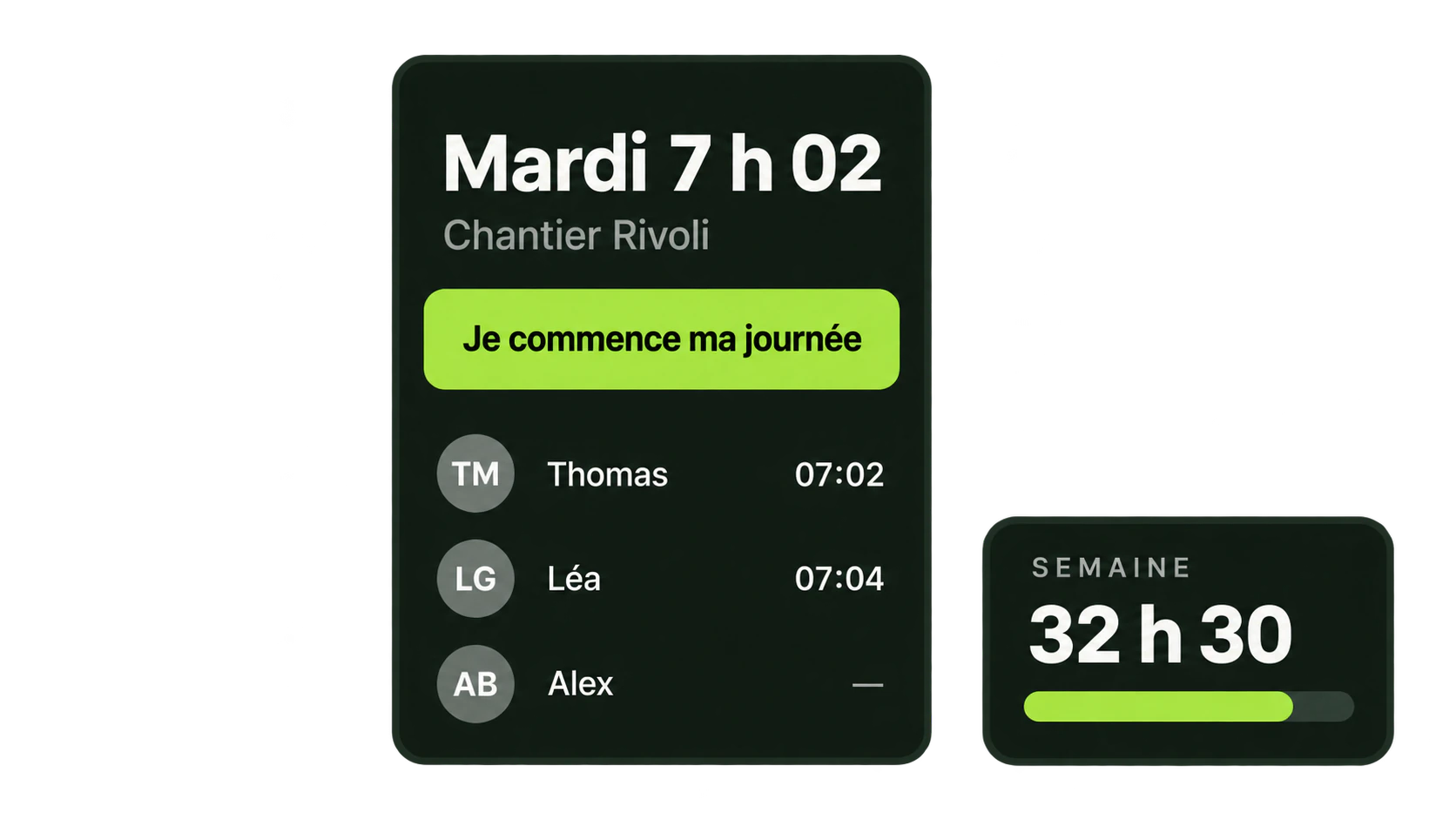
Their words, exactly as they wrote them to us.
Communication was fast and effective throughout the project. They analyzed our needs perfectly and met them 100%, if not more — genuinely high standard, while staying true to the offer. Timelines were excellent. What really struck us was their expertise: they guided us and explained their choices clearly, bringing real know-how about what converts. Serious, responsive and expert — I recommend them without hesitation!

Steve Bron
Co-founder, Buckmoon Agency
The team did a fabulous job. Their support from start to finish, their professionalism, commitment and recommendations mean I'll be working with them again! I've finally found my go-to agency! I highly recommend them — you can go in with your eyes closed.

Maxime Dohollo
CEO, Agence Nuisibles
The Edenio team was incredibly committed from the start. They understood our brand world, our tone and our technical constraints. The design is modern, clear and true to who we are. Communication was always smooth, deadlines were met, and their strategic advice on user experience had a real impact on our conversions.

Jeremy Boissinot
CEO, Favikon
We worked together for several months and I'm fully satisfied with what was delivered. He quickly grasped how complex and varied our offer is, and put in place a clear, smooth, well-thought-out process.

Alexandre Velardocchio
Co-founder and CEO, Gust
Here are the first three qualities that come to mind: professionalism, integrity, efficiency. Thank you for our exchanges and for the work delivered. I recommend them.

Fabien Nahum
Head of Sales, Opsima
And if yours isn't here, ask us directly.
Yes. The FLSA requires an accurate record of hours worked each day and each week, but doesn't prescribe how you keep it. A timestamped clock-in, kept and exportable, does the job — and some states go further, so check yours.
Under the FLSA, at least two years for time cards and three for payroll records, longer in some states. The app keeps them for as long as you set, and they stay exportable.
No, and it isn't needed for a record to stand. If you want it, tell your staff, limit it to working hours and check your state's rules. That is a management decision, not a technical setting.
Through an export in the format your payroll software or accountant expects. Hours entered on site become payroll data without a second entry — that is where the real time saving sits.
They clock on each one. Hours land on the right budgets, and travel pay follows real attendance rather than an average decided at month end.
No. Payroll stays with your vendor or your accountant, with its obligations and its regulatory updates. We supply what it lacks: reliable hours, filed against jobs, ready to import.
Let's talk
We look at how you work, and give you the number that goes with it.
No commitment · You pick the time



 Jérôme Knops
